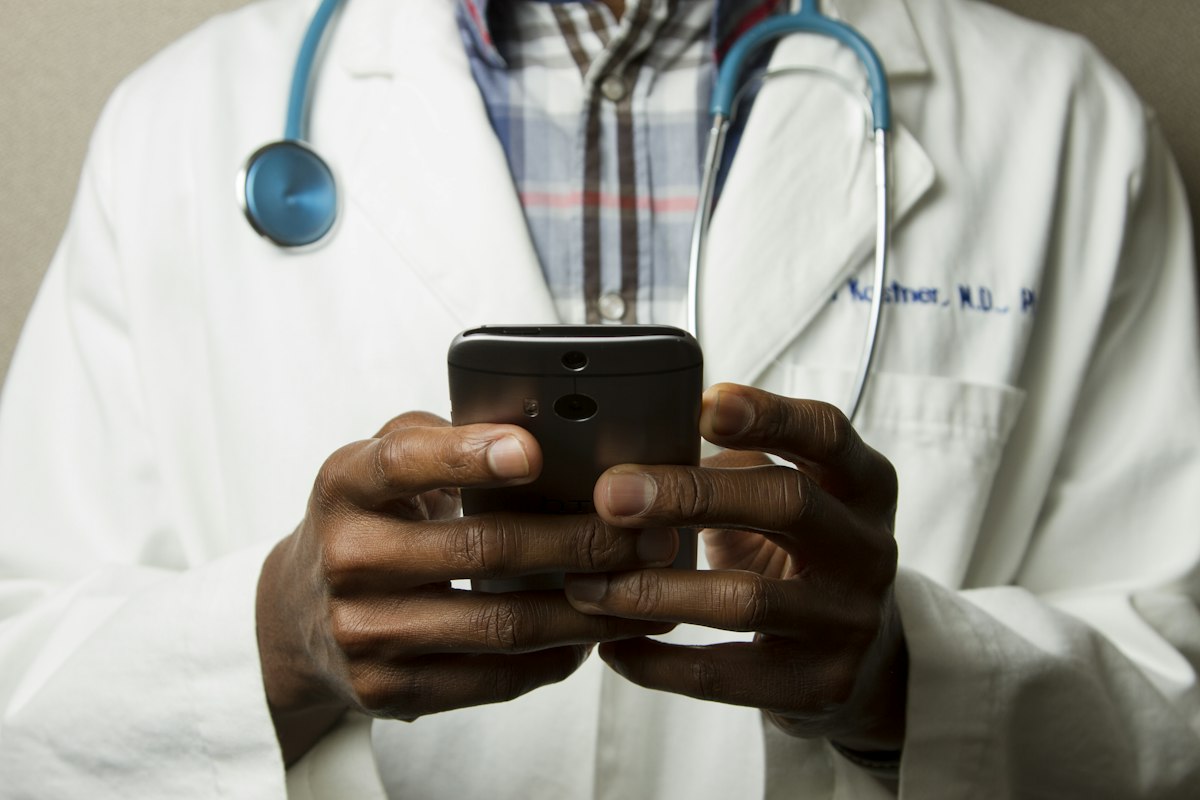
Healthcare stands as perhaps the most impactful domain for artificial intelligence applications. From detecting diseases in medical images with superhuman accuracy to accelerating drug discovery from decades to months, AI is fundamentally reshaping how we prevent, diagnose, and treat illness. The stakes couldn't be higher—these technologies directly affect human lives—and the progress has been remarkable.
Medical Imaging and Diagnostics
AI's first major healthcare breakthrough came in medical imaging. Deep learning models can now analyze X-rays, CT scans, MRIs, and pathology slides with accuracy matching or exceeding human specialists. Google's DeepMind detected over 50 eye diseases from retinal scans as accurately as world-leading ophthalmologists. Similar systems now screen for breast cancer, lung nodules, and skin cancer.
The real-world impact is profound. In radiology, AI serves as a "second reader," catching findings that humans might miss due to fatigue or volume. Studies show AI-assisted radiologists detect more cancers and make fewer false positives. For patients, this means earlier detection and better outcomes.
AI Imaging Applications:
- 🔬 Cancer Detection: Mammography, lung CT, skin lesion analysis
- 👁️ Ophthalmology: Diabetic retinopathy, macular degeneration screening
- 🧠 Neurology: Brain tumor detection, stroke identification
- ❤️ Cardiology: ECG analysis, cardiac imaging interpretation
- 🦴 Pathology: Tissue sample analysis, cell classification
Drug Discovery and Development
Traditional drug development takes 10-15 years and costs billions of dollars, with a 90% failure rate. AI is compressing these timelines dramatically. Machine learning models can predict how molecules will interact with biological targets, identify promising drug candidates, and optimize compounds for efficacy and safety—all before expensive laboratory testing.
The COVID-19 pandemic accelerated this trend. AI helped identify existing drugs that might work against SARS-CoV-2 and accelerated vaccine development. Moderna's mRNA vaccine development relied heavily on computational methods, demonstrating that AI-augmented drug development isn't future speculation—it's present reality.
Companies like Insilico Medicine, Recursion, and Exscientia are using AI to discover novel drug candidates. Insilico designed a potential fibrosis drug from scratch using AI in just 18 months—a process that typically takes 4-5 years. Several AI-discovered drugs have entered clinical trials, marking a new era in pharmaceutical research.
Clinical Decision Support
AI systems increasingly assist physicians in clinical decision-making. These tools analyze patient data—medical history, lab results, imaging, genetics—to suggest diagnoses, recommend treatments, and predict outcomes. They're particularly valuable for complex cases involving multiple conditions or rare diseases that any single physician might not have encountered.
Epic Systems, the dominant electronic health record provider, has integrated AI predictive models that alert clinicians to patients at risk of sepsis, deterioration, or readmission. Early warning systems like these have demonstrated mortality reductions in hospitals that implement them effectively.

Personalized Medicine
AI enables truly personalized treatment by analyzing individual patient characteristics—genetics, lifestyle, environment—to predict which therapies will be most effective. In oncology, AI helps match cancer patients to targeted therapies based on their tumor's genetic profile. This precision medicine approach improves outcomes and reduces side effects from ineffective treatments.
Foundation Medicine and Tempus use AI to analyze tumor DNA and recommend personalized treatment options. These platforms have analyzed hundreds of thousands of cancer cases, building knowledge bases that continuously improve their recommendations.
Administrative Efficiency
Beyond clinical applications, AI addresses healthcare's massive administrative burden. Clinicians spend nearly half their time on documentation rather than patient care. AI-powered transcription services like Nuance's DAX automatically generate clinical notes from patient conversations. Natural language processing automates coding, billing, and prior authorization—reducing costs and letting clinicians focus on care.
Chatbots handle appointment scheduling, prescription refills, and routine questions, freeing staff for complex tasks. These seemingly mundane applications have enormous impact: the US healthcare system spends over $250 billion annually on administrative costs that AI can reduce.
Challenges and Considerations
Healthcare AI faces unique challenges. Regulatory approval through bodies like the FDA is rigorous and time-consuming—appropriately so, given the stakes. Data privacy regulations (HIPAA, GDPR) restrict how patient information can be used for training. Bias in training data can lead to AI systems that perform poorly for underrepresented populations, potentially exacerbating health disparities.
Trust is another barrier. Physicians need to understand and trust AI recommendations before acting on them. "Black box" AI that can't explain its reasoning faces adoption challenges. The field is moving toward more interpretable models that show their work, enabling clinician oversight.
⚠️ Important Consideration
AI healthcare tools are designed to augment, not replace, physician judgment. Regulatory frameworks, clinical validation, and appropriate human oversight remain essential for safe deployment.
The Future of Healthcare AI
The trajectory is clear: AI will become embedded throughout healthcare delivery. Multimodal models that combine imaging, genomics, clinical notes, and real-time monitoring will provide unprecedented insights into patient health. Continuous learning systems will improve with every patient encounter. Virtual health assistants will manage chronic disease between appointments.
Most importantly, AI has the potential to democratize healthcare quality. Expert-level diagnostic capability could reach underserved regions through smartphone apps. Rare disease patients could benefit from AI that has "seen" more cases than any human specialist. The technology exists—the challenge is ensuring equitable, safe, and effective deployment.
Key Takeaways
- • AI matches or exceeds human accuracy in many diagnostic imaging tasks
- • Drug discovery timelines are compressing from years to months
- • Clinical decision support reduces errors and improves outcomes
- • Administrative AI saves billions while reducing clinician burden
- • Regulation, bias, and trust remain important challenges to address